Tell us what needs to be shredded
Email the FYXFER team with the material, the result you need and the information currently available. You do not need to choose a final model before starting the discussion.
Sales and project inquiries: sales@fyxfer.com
Include “Shredder project” and your material in the email subject so the purpose of the inquiry is clear.
A short brief to include in your email
- Material and source: polymer or waste type, source process and whether the stream is mixed.
- Photos and dimensions: normal and largest pieces, with thickness or diameter where relevant.
- Condition: contamination, inserts, moisture and other difficult features.
- Required result: target output and what happens to the material after shredding.
- Volume and duty: hourly or shift amount, feeding pattern and operating schedule.
- Site and handling: loading, discharge, available space, power supply and any line interfaces.
- Project context: company, destination country and planned schedule.
Photos, drawings and process videos can be shared through the email conversation. If a material test is needed, agree on the sample and test requirements with the team before sending it.
What the discussion covers
The first step is to identify the likely machine family and any missing information. The next discussion can address cutters, feeding and discharge, controls, required checks and the proposed supply scope before a technical and commercial response is prepared.
Response timing depends on the information available and the level of engineering review required.
You can begin with the material, even without a model
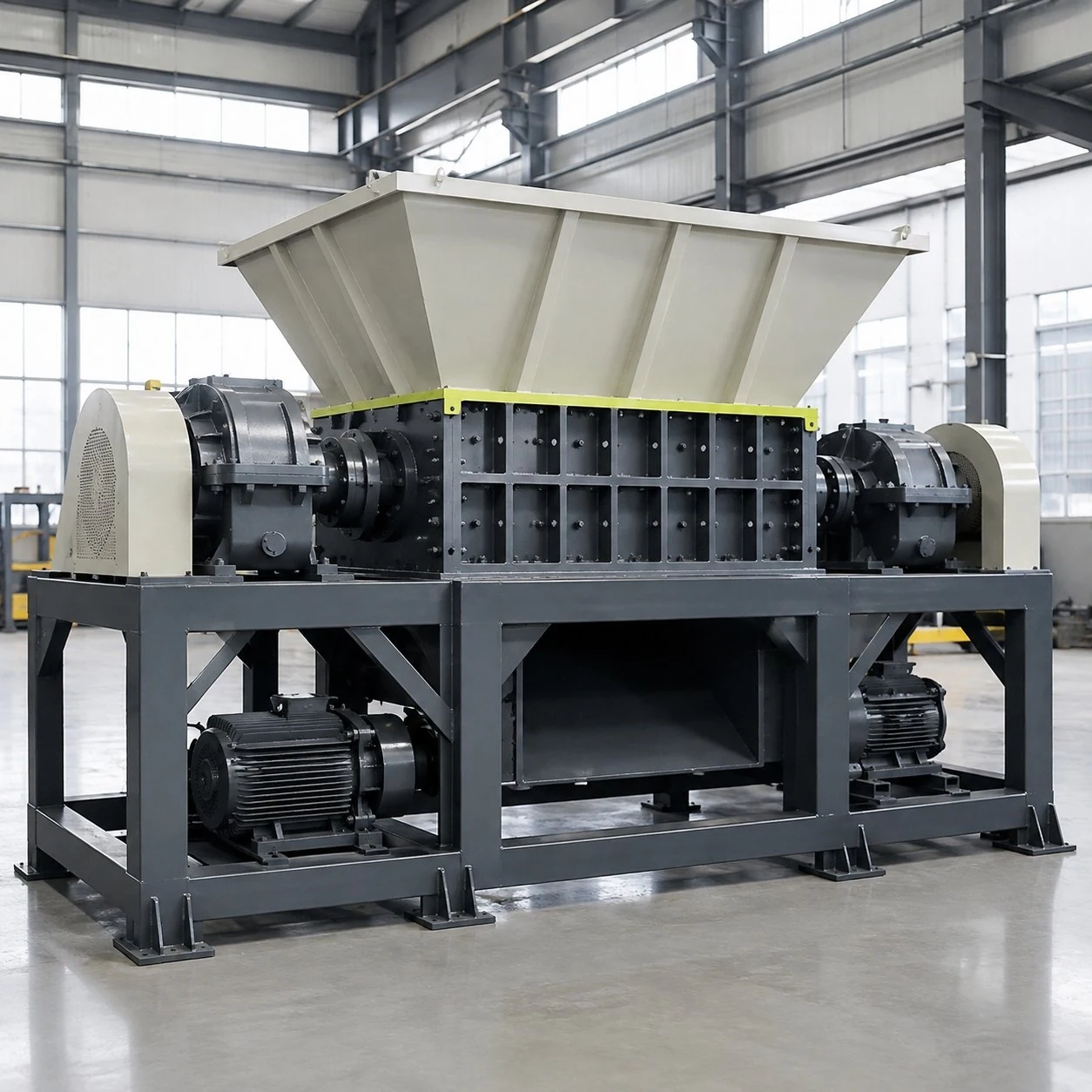
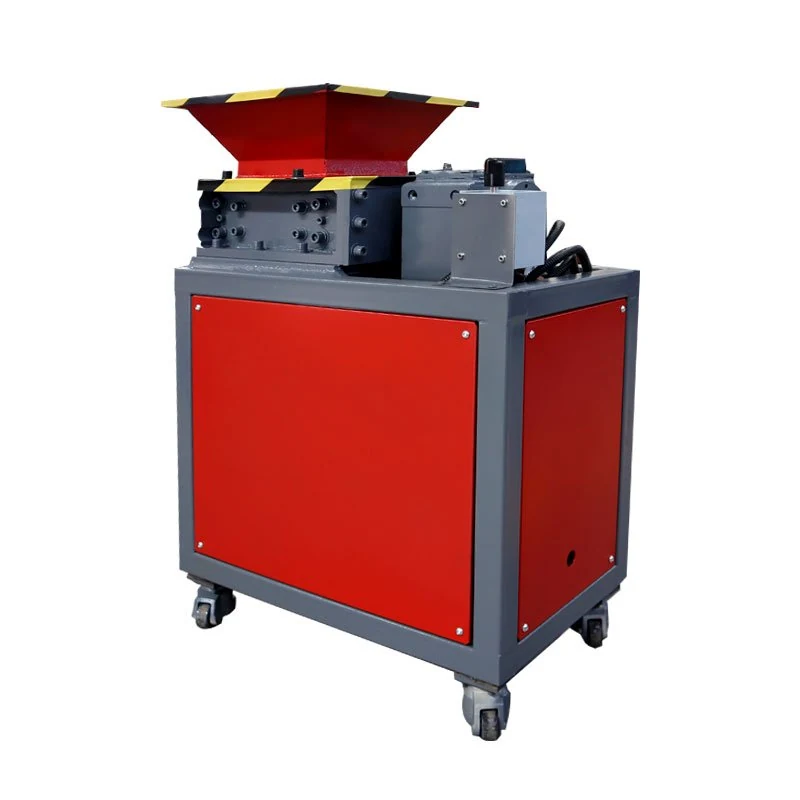
The two equipment views illustrate different configuration routes. A photograph alone cannot confirm the right model, acceptable feed or required capacity for your application.
Photographs that make an enquiry easier to assess
- An overall view of the normal material with a ruler or another known scale.
- The largest complete item and close-ups of its thickest or most difficult sections.
- A typical bin, bundle or batch, with its weight and volume when known.
- The intended loading area, collection point and surrounding equipment where layout affects the project.
Organize the first exchange and any sample review
- Send what is known: identify the material, source process, largest pieces and desired result. Mark uncertain information clearly instead of guessing.
- Clarify the route: compare compact, two-stage or heavy-duty starting points and resolve missing feed, duty and layout details.
- Agree any trial: confirm sample contents, quantity, condition, destination and test objective with the team before shipping material.
- Review the proposal: check the configuration, options, interfaces, applicable documents and acceptance criteria against your original requirement.
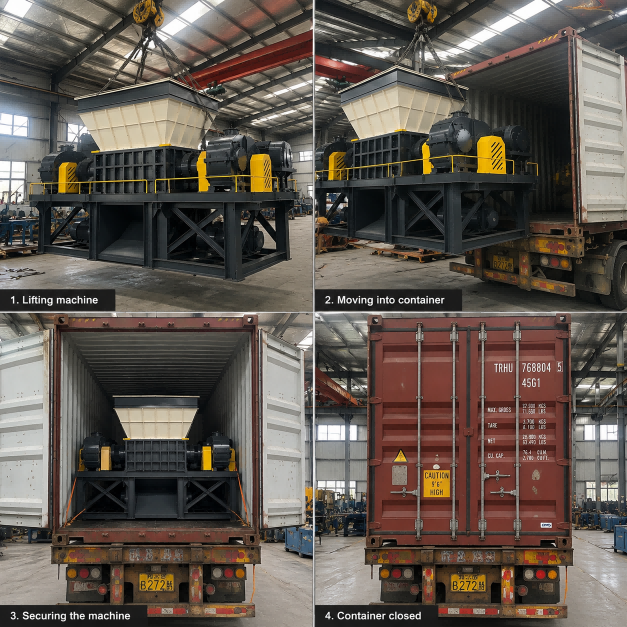
For delivery planning, include the destination, site access and known unloading constraints. These loading views are configuration references; final arrangements use the confirmed machine dimensions, weight and lifting information.
What if the waste stream contains several materials?
List each material and its normal proportion or frequency. Keep sample groups identified, disclose inserts and contaminants, and explain whether streams can be separated before processing. A sample of one material does not establish suitability for the whole mixture.
What should a capacity request include?
Give the required amount per hour or shift, operating hours and peak batch conditions. Add the loading method and the next process. Distinguish a continuous target from the need to clear an occasional batch.
Can a price be prepared from a model name alone?
The proposed supply needs a defined configuration and scope. Include destination, power supply, feeding and discharge, required options and project timing so the discussion can address both the machine and its interfaces.
The selection checklist provides a convenient order for the information. Continue through the sales email shown above; no separate form or account is required by this page.
Useful starting points
- FY-SS01 for mini, compact and integrated two-stage applications
- FY-SS02 for heavy-duty project review
- English guides and reference datasheets
For a factory visit or remote video review, email the team to coordinate the project context and schedule.