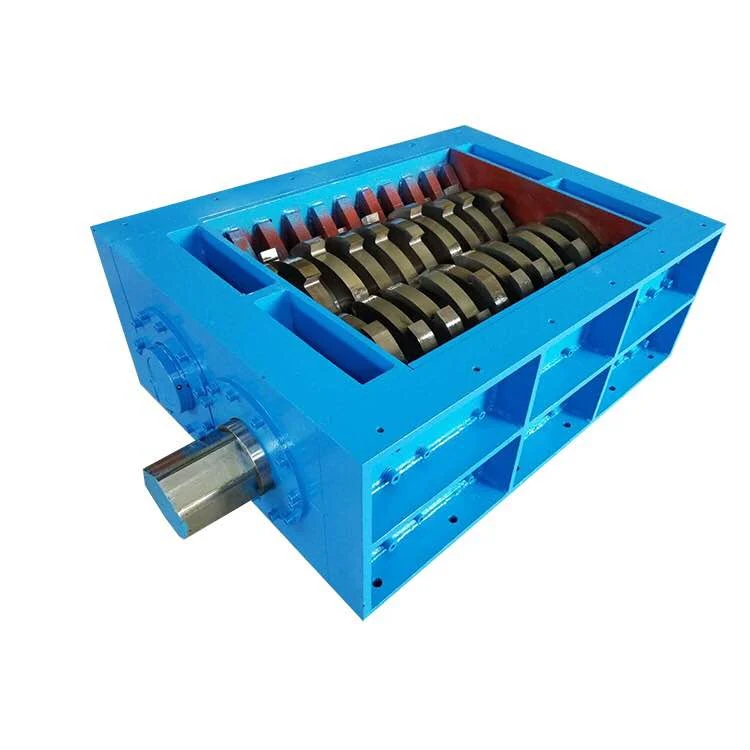
Prepare the information behind a useful shredder recommendation
Use this page to compare the selection routes, build a material brief and find the relevant FYXFER reference documents. A series guide helps narrow the options; the final machine configuration follows the actual material and agreed project requirements.
Your material and process checklist
- Material: name the polymer or waste stream, its source and whether different materials are mixed.
- Feed: provide normal and maximum dimensions, shape and wall thickness. Photographs with a scale are useful.
- Condition: describe moisture, contamination, inserts and other foreign objects.
- Output: define the required condition or size range and explain the next process.
- Volume: state the material generated per hour or shift, the feeding pattern and operating hours.
- Material flow: show how the waste is loaded, discharged, collected or transferred onward.
- Site: include available space, electrical supply, access, control interfaces and destination country.
Three questions to settle before selecting a model
What must the output do?
Material prepared for storage or transport can have different requirements from material entering sorting, washing, granulation or another production step. Define the downstream requirement before asking for finer reduction.
What determines the processing rate?
Motor power alone does not establish throughput. Material geometry, bulk density, feeding consistency, cutter arrangement and condition, required output and discharge can all affect the result.
When is a representative test useful?
Testing is useful when feed behavior is uncertain, composition varies or the project depends on a particular output and capacity. Agree on the sample condition, test objective and acceptance method. Include difficult pieces that are typical of the real waste stream.
Compare the available FYXFER machine families and review the application starting points.
Choose the document for the decision you are making
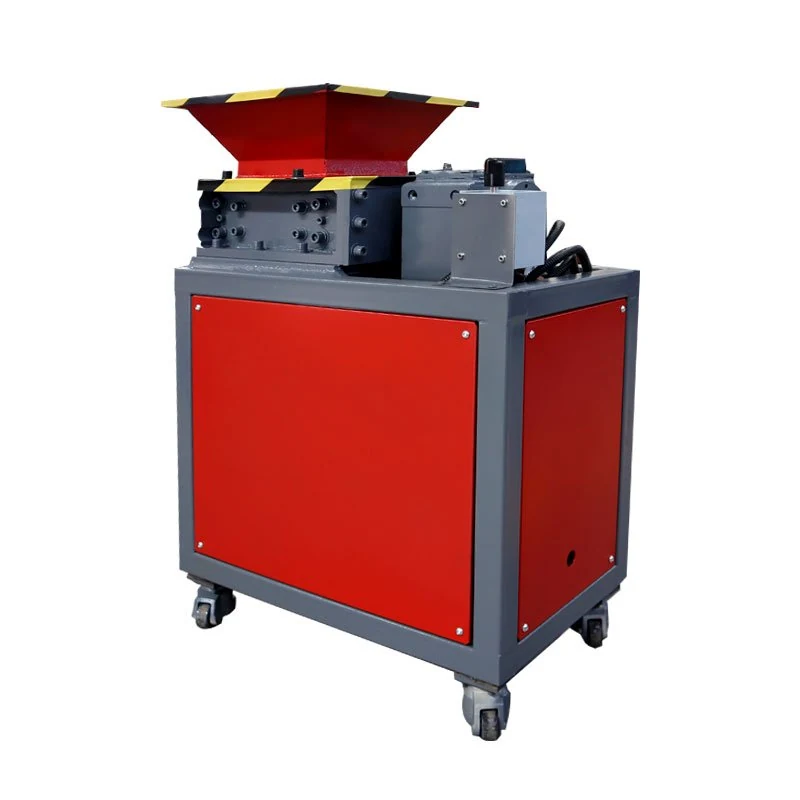
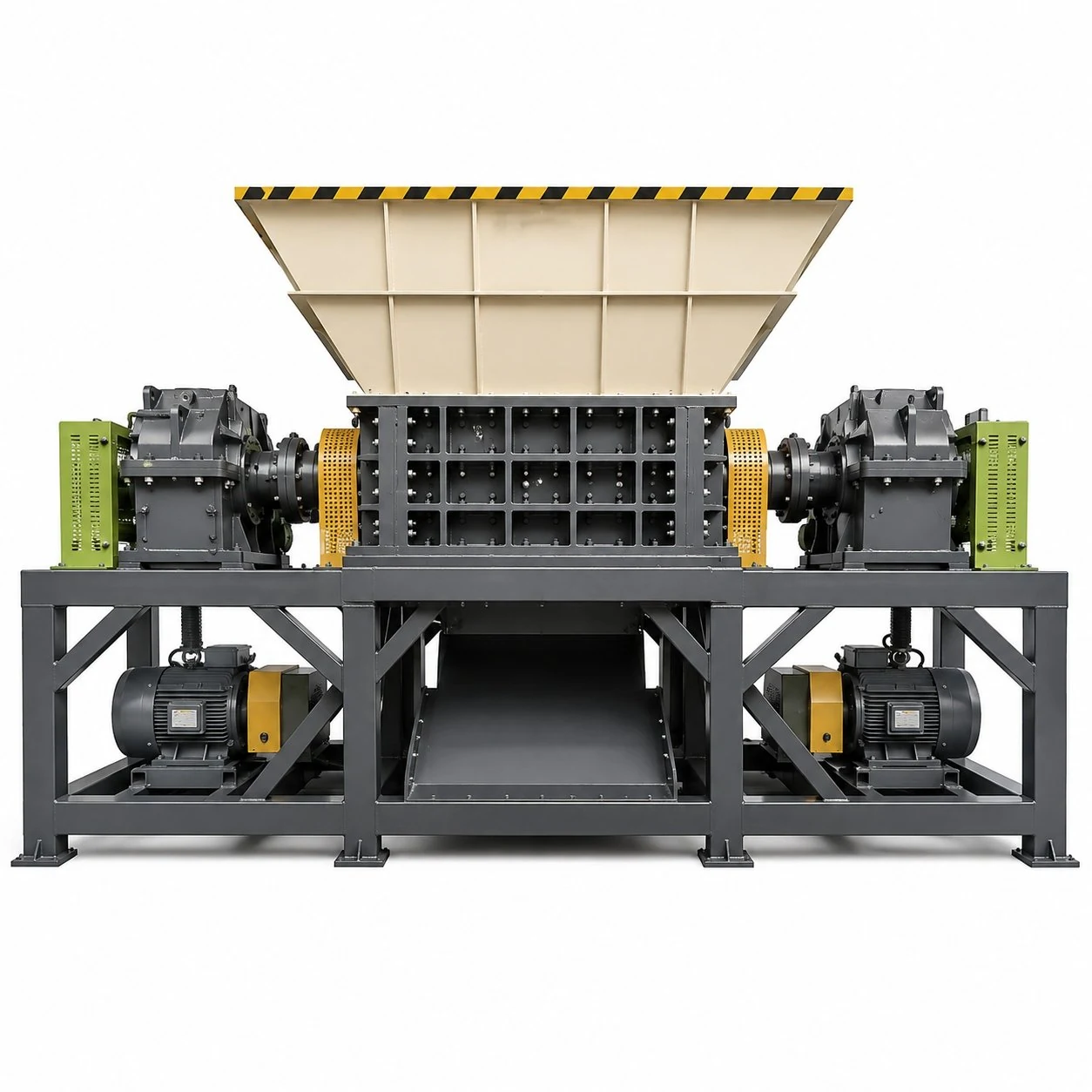
| Document | Use it to | Confirm separately |
|---|---|---|
| FY-SS01 series guide | Compare mini, standard compact and integrated two-stage references. | Usable feed clearance, material suitability and the required output. |
| FY-SS02 series guide | Review the published project classes and prepare the material brief. | Project drive, cutters, opening, dimensions and process interfaces. |
| FY-SS01-300 datasheet | Review the individual 300 reference configuration. | The final ordered build; its values do not describe every compact or 2S model. |
| FY-SS02 reference datasheet | Understand the heavy-duty platform and configuration discussion. | The specification and supply scope for the selected project class. |
Read the model name, units and reference conditions together. A chamber dimension, a hopper reference and an overall machine dimension describe different things. Cutter thickness also does not by itself define the final particle size.
Use the final drawing for delivery planning
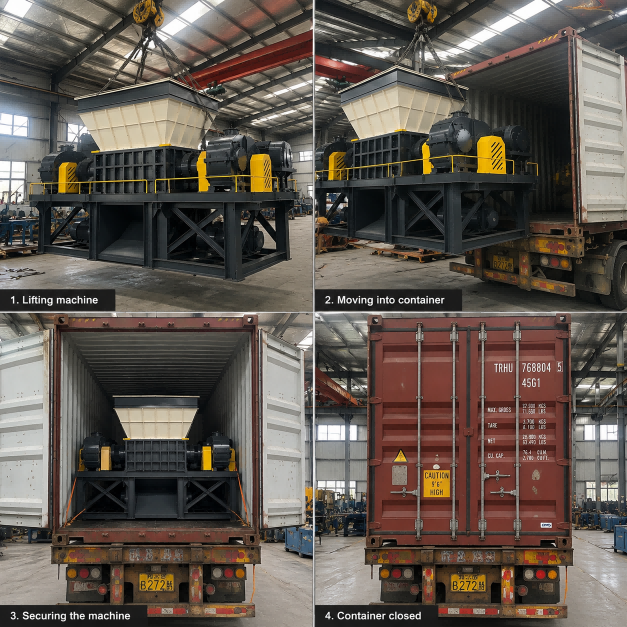
Reference loading views support the planning discussion. Confirm the final dimensions, weight, lifting points, packing method and shipping route for the supplied configuration rather than planning from a series photograph.
Prepare a useful material-test record
Agree the sample quantity and test objective before dispatch. Keep separate material streams identified and include difficult pieces that occur in the real process. A useful record connects the result to the material and operating conditions under which it was obtained.
- Sample: composition, grade, dimensions, weight, moisture and contamination.
- Feeding: batch size, preparation, loading method and interruptions.
- Configuration: the machine, cutter arrangement and any relevant screen or secondary stage.
- Observation: output distribution, oversize pieces, bridging or reverse events, with photographs or video where useful.
- Acceptance: the agreed output and processing objective, measurement method and any limitations recorded during the review.
Can a short test be reported as a full-shift capacity?
Keep net cutting time, total feeding time and the normal operating pattern distinct. Loading gaps, preparation, discharge and downstream equipment affect average output. Compare results only when the material and test conditions are stated.
What if a value is missing from a reference sheet?
Request confirmation in the project quotation or drawing. Do not fill a gap by scaling another model or treating the model code as a dimension. The shredder comparison links to the individual model references.
English guides and reference datasheets
FY-SS01 Series Selection Guide
Compare the mini, compact and integrated two-stage routes within the FY-SS01 family.
FY-SS02 Series Selection Guide
Review the heavy-duty project classes alongside material, feeding and downstream requirements.
FY-SS01-300 Reference Datasheet
A reference for this individual plastic-shredder configuration. It does not describe every FY-SS01 model.
FY-SS02 Heavy-Duty Reference Datasheet
A starting reference for the industrial dual-shaft platform and its project review.
Reference configurations require confirmation against the proposed supply scope. Final specifications, material suitability and operating results should be established in the agreed quotation, drawings and any required material test.