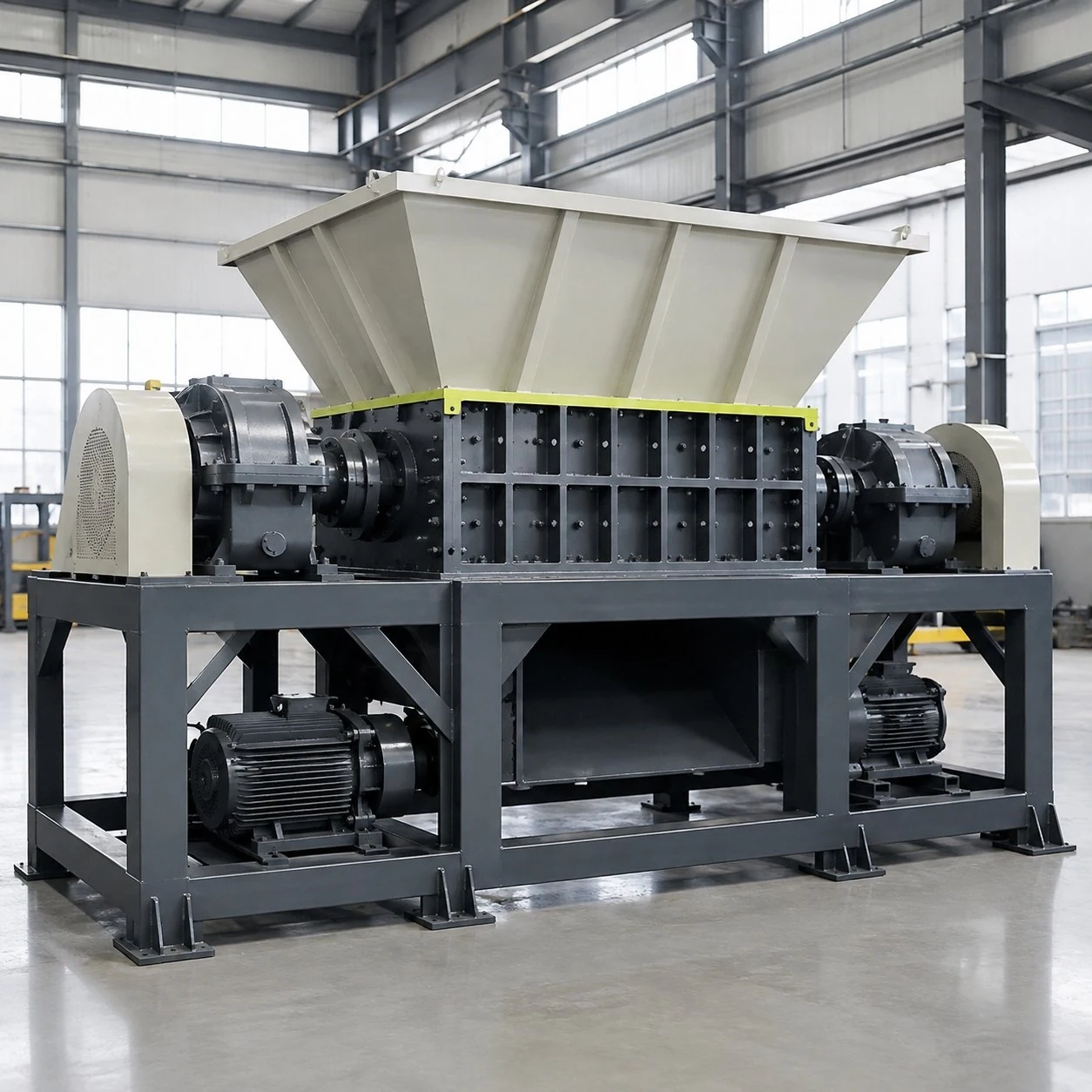
Review larger, tougher or more variable feed
FY-SS02-800 is a published medium heavy-duty project class for larger, tougher or more variable waste. It belongs to the FY-SS02 dual-shaft platform, which uses slow-running cutter shafts for primary reduction of suitable material.
The class identifies a starting point for review. Final drive, cutter and dimensional specifications follow the material assessment. The number 800 does not independently confirm the usable feed width, motor power or processing capacity.
FY-SS02-800 configuration reference
| Item | Basis for review |
|---|---|
| Model | FY-SS02-800 |
| Project class | Medium heavy-duty class for larger, tougher or more variable waste |
| Cutting system | Dual shaft; cutter geometry selected for the material and required result |
| Drive | Project-defined; drive approach and motor ratings to be confirmed |
| Feed opening, dimensions and weight | Confirm in the approved project drawing |
| Throughput and output size | Confirm against actual feed, loading, configuration and duty |
Make waste variation visible in the selection brief
The 800 class is a useful review route for larger, tougher or more variable waste. Instead of sending one easy sample, identify the range of shapes, densities and resistant pieces expected during normal operation.
- Separate representative groups
- Show loose, nested, long or bulky pieces separately where their feeding behaviour differs, then explain whether they will be processed together.
- Record composition changes
- List the materials and expected proportions, including contaminants and any grades or constructions that are unusually tough.
- Identify peak batches
- Describe the largest planned load and its frequency, not only the average mass generated over the day.
Check how different shapes engage the shafts
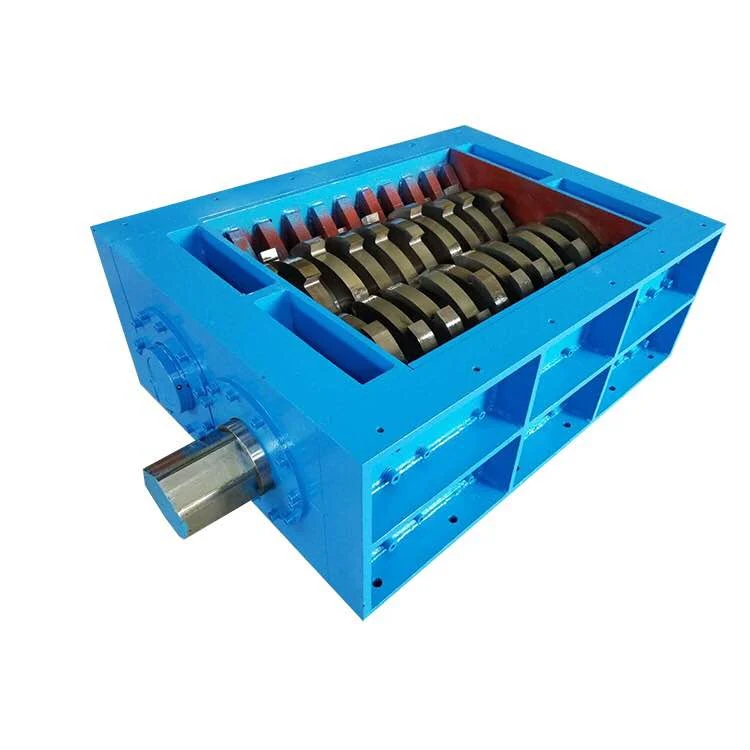
The dual-shaft platform grips, tears and shears suitable material. With variable feed, review the change from one representative batch to another as well as the result from each batch on its own.
- Agree which waste groups require sorting or preparation before they reach the hopper.
- Assess presentation to the cutter shafts, including awkward pieces that may bridge or load unevenly.
- Review the cutter and drive configuration together with the proposed overload response.
- Check output and discharge for each important feed group against the requirements of the next process.
Describe variation within the waste stream
Show the material that is easiest to feed and the pieces that are hardest to process. Differences in geometry, density, section thickness or contamination can affect engagement and cutting. A representative review should include those differences rather than only a convenient sample.
- Material categories and the proportion or frequency of each type in a mixed stream.
- Normal and maximum piece dimensions, thick sections and dense or bundled material.
- Contamination, embedded objects and any sorting or preparation before loading.
- Required output distribution, throughput, feeding method and operating hours.
Connect feed preparation with the machine configuration
For a variable stream, agree what will reach the shredder after any sorting or preparation. Review the hopper, cutter geometry, drive and protection strategy against that defined feed. Conveyors, separation and downstream handling can be evaluated as project options, with their supply scope identified separately.
Does 800 identify the usable feed opening?
The model number alone cannot answer that question. Confirm the whole piece geometry, usable opening, loading orientation and cutting arrangement against the approved drawing. A nominal class code is not an opening dimension.
Allow for sorting, collection and changing material conditions
A variable stream can change the work outside the cutting chamber. Show where incoming groups are held, how output is separated when necessary and how collection equipment will be exchanged.
- Identify upstream removal or separation for foreign objects before the loading arrangement is agreed.
- Keep access for inspection and cleaning available during material changes, using the machine-specific isolation procedure.
- Include contamination and abrasion in wear and spare-parts discussions instead of setting a maintenance expectation from clean material alone.
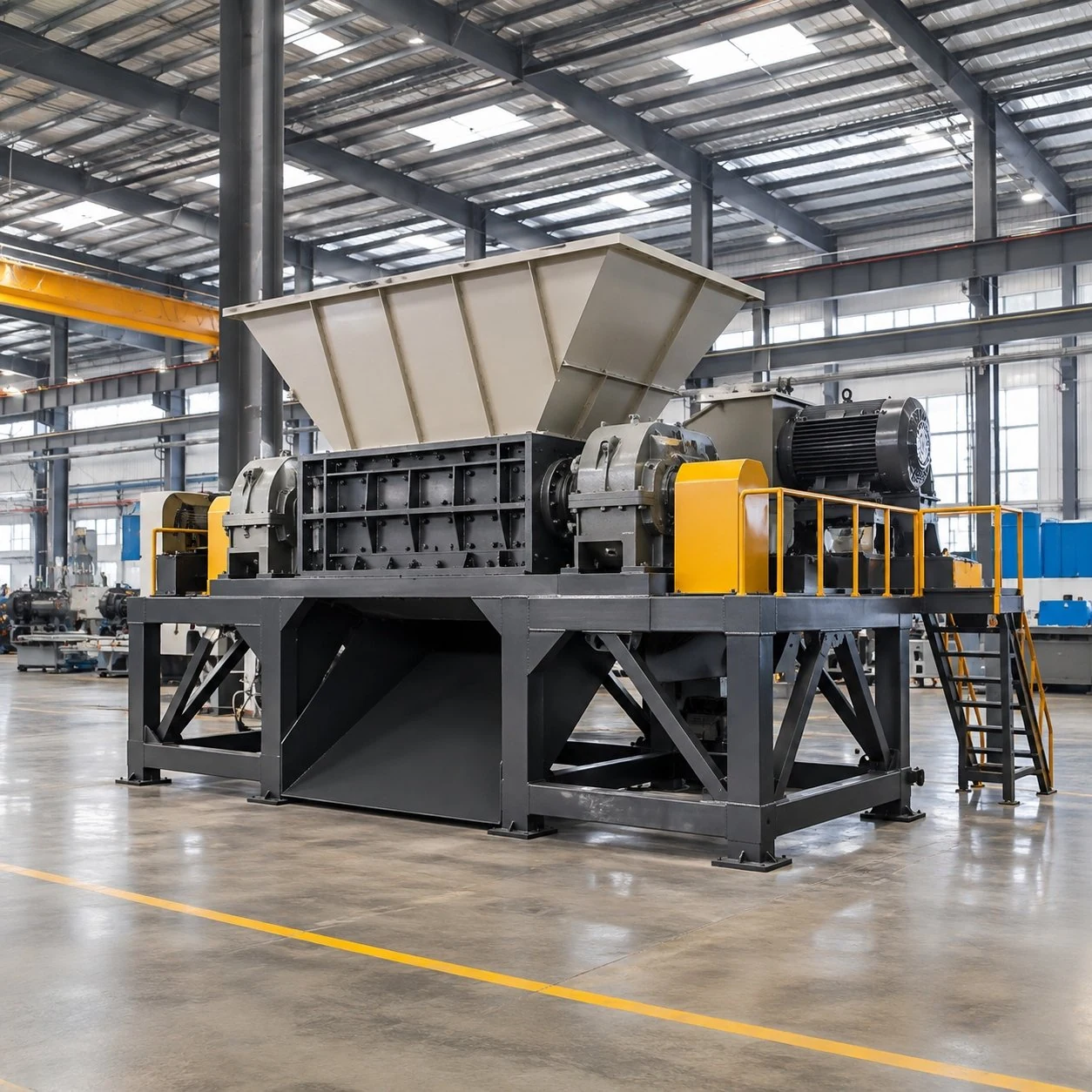
FY-SS02-800 Heavy-Duty Dual-Shaft Shredder — practical questions
Does the 800 code give the feed width?
The code identifies a project class. Obtain the usable feed opening and machine dimensions from the approved drawing for the selected waste and loading arrangement.
What should a mixed-feed trial include?
Include the normal material groups, difficult pieces and disclosed contamination in a representative condition. Keep the test conditions and output assessment clear enough to compare the important variations.
When is a 1000-class review useful?
Compare that route when industrial feeding and downstream integration become central to the project. Define the complete material flow and interfaces alongside the cutting task.
Prepare your FY-SS02-800 review
Send material photographs, the most difficult expected pieces and the process information above. Final specifications, options and acceptance criteria should be recorded in the project quotation and approved drawings.
Download the FY-SS02 series selection guide (PDF) for the shared selection framework. It is a series reference, not a final specification for this model.
Review FY-SS02-1000 · Return to the FY-SS02 series · Discuss your material with FYXFER SHRED