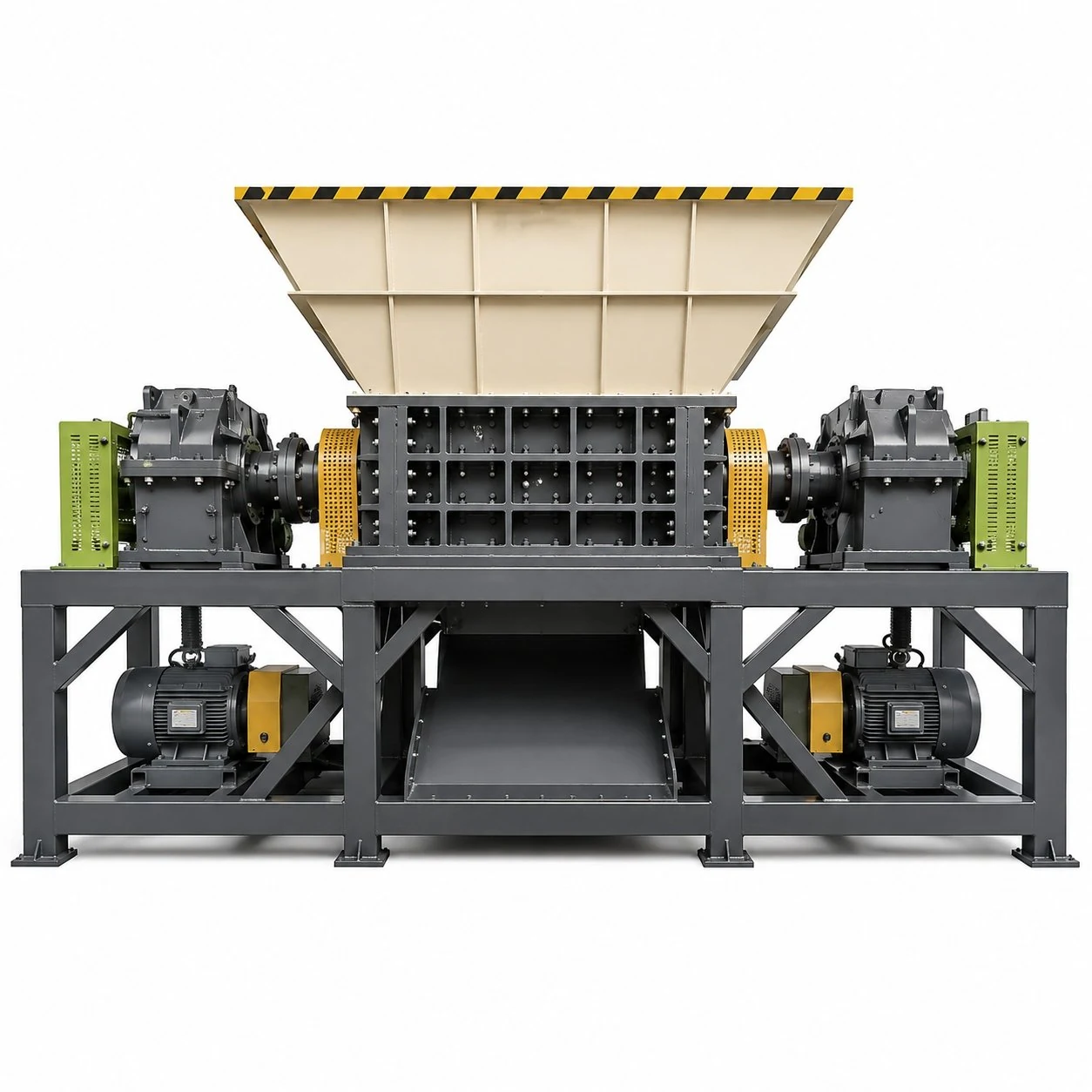
Define the shredder within the complete process
FY-SS02-1000 is a published expanded heavy-duty project class for industrial feeding and downstream integration. The FY-SS02 platform uses two cutter shafts to grip, tear and shear suitable bulky or resistant material.
This class is a configuration starting point, with final specifications established after material review. The proposed loading system, discharge route and downstream operation should be considered alongside the drive and cutters.
FY-SS02-1000 configuration reference
| Item | Basis for review |
|---|---|
| Model | FY-SS02-1000 |
| Project class | Expanded heavy-duty class for industrial feeding and downstream integration |
| Cutting system | Dual shaft; cutter geometry selected for the material and required result |
| Drive | Project-defined; drive approach and motor ratings to be confirmed |
| Feed opening, dimensions and weight | Confirm in the approved project drawing |
| Throughput and output size | Confirm against actual feed, loading, configuration and duty |
Write the process route before choosing the interfaces
The 1000 class is positioned for industrial feeding and downstream integration. Start with a simple flow showing where waste comes from, how it is loaded, what reduction is required and where the output goes next.
- Upstream supply
- Identify the incoming equipment or container, batch size, loading height and the interruptions expected during normal production.
- Shredding task
- Describe the full material mix, maximum pieces and difficult contaminants so the cutting arrangement can be reviewed.
- Downstream demand
- List the conveyor, sorting, separation or further-processing step and the output conditions it needs.
Coordinate feed, reduction and transfer
The useful result depends on the whole line. Feeding, shredding and discharge must work together; a downstream restriction can limit the process even when the cutter system can reduce the incoming material.
- Define how upstream equipment presents material to the hopper and how loading is controlled.
- Review engagement, tearing and shearing using the proposed cutter and drive configuration.
- Agree the interface response when downstream equipment cannot accept material.
- Check the discharged material and transfer route against the downstream operation's acceptance criteria.
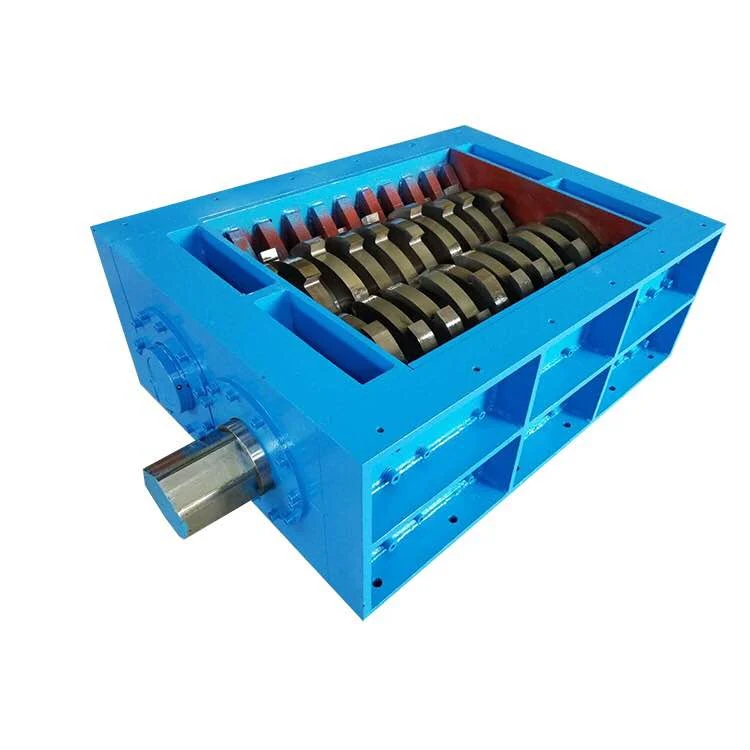
Map the route into and out of the shredder
Describe how material arrives, how it will be loaded and where the reduced material goes next. A requirement for primary reduction should identify the output needed by collection, sorting, separation or another processing stage. These interfaces help define the overall equipment review.
- Feed composition, largest pieces, piece weight or bulk density and contamination.
- The proposed loading method and any feeding conveyor or upstream preparation.
- Target output distribution and the requirements of downstream equipment.
- Available space, discharge arrangement, power supply and control interfaces.
Identify which supporting equipment is included
Feeding conveyors, discharge conveyors, magnetic separation, sorting equipment and related controls can be evaluated for the process. Their inclusion is project-specific. The quotation and layout should state each interface and the agreed supply scope, together with access for operation and maintenance.
Is a complete conveyor line included with the model?
The model code does not define a standard line package. Confirm the shredder configuration, supporting equipment and control responsibilities in the quotation and approved drawings before placing an order.
Create an equipment and responsibility list
A process layout becomes more useful when each component has an identified supplier and interface. Separate the shredder itself from optional conveyors, separation equipment, platforms and controls.
- Show feed and discharge elevations, transfer points, available space and the routes for operators and maintenance.
- Identify control communications and interlocks to be agreed between the shredder and connected equipment.
- Reserve access for cutter inspection, cleaning and component handling, with safe isolation coordinated across the connected line.
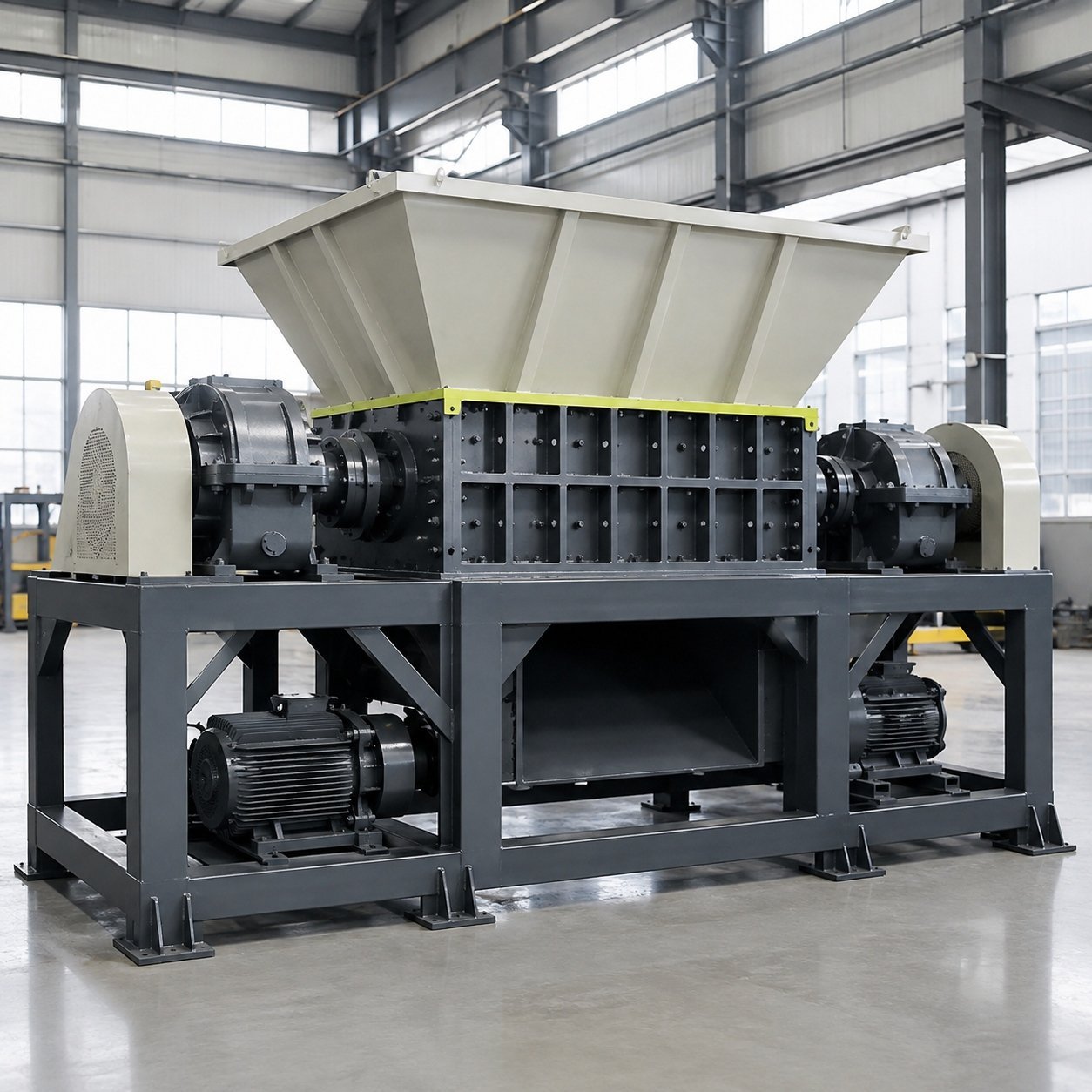
FY-SS02-1000 Heavy-Duty Dual-Shaft Shredder — practical questions
Are conveyors and separators part of every 1000 project?
They are options for review within the overall process. Confirm the equipment list and responsibilities in the quotation so that integration does not imply unlisted supplied equipment.
How should the output target be specified?
State the size distribution and material condition required by the next process, along with the operating rate and feeding pattern. Include any limits on long pieces, fines or contaminants that affect transfer or separation.
Why compare the layout as well as the cutting system?
A suitable cutter arrangement can still be restricted by loading or discharge. Reviewing space, transfers and controls together reveals the requirements for a usable industrial line.
Prepare your FY-SS02-1000 review
Send material photographs, the most difficult expected pieces and the process information above. Final specifications, options and acceptance criteria should be recorded in the project quotation and approved drawings.
Download the FY-SS02 series selection guide (PDF) for the shared selection framework. It is a series reference, not a final specification for this model.
Review FY-SS02-1200 · Return to the FY-SS02 series · Discuss your material with FYXFER SHRED