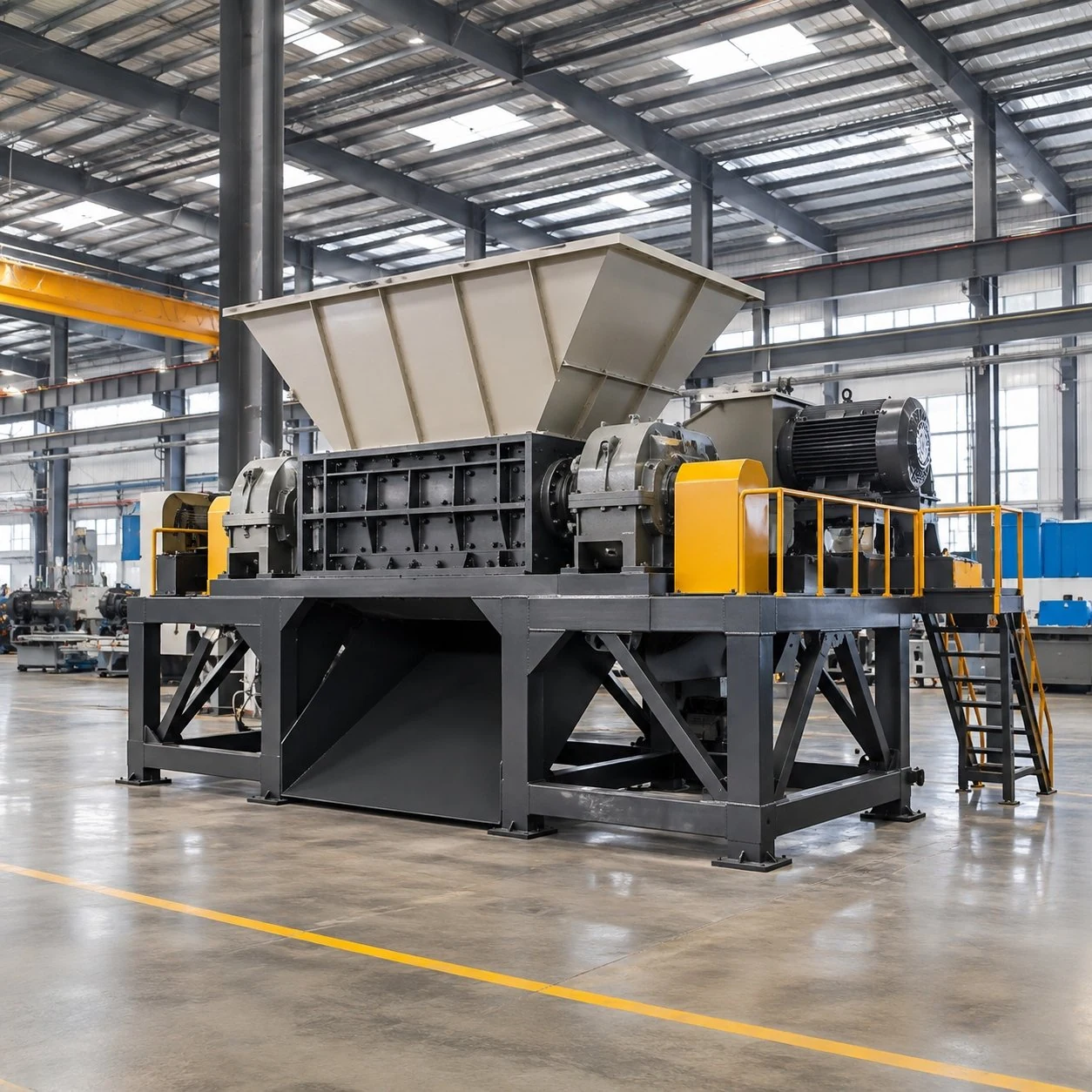
Review bulky feed and the equipment around it
FY-SS02-1400 is a published large industrial project class for bulky-feed systems and supporting equipment. Its configuration follows the actual waste stream within the FY-SS02 heavy-duty dual-shaft platform.
The largest pieces and the way they will be loaded are central inputs to the review. Hopper arrangement, cutters, drive, discharge and supporting equipment remain project-specific; the model name does not fix a universal opening or machine size.
FY-SS02-1400 configuration reference
| Item | Basis for review |
|---|---|
| Model | FY-SS02-1400 |
| Project class | Large industrial class for bulky-feed systems and supporting equipment |
| Cutting system | Dual shaft; cutter geometry selected for the material and required result |
| Drive | Project-defined; drive approach and motor ratings to be confirmed |
| Feed opening, dimensions and weight | Confirm in the approved project drawing |
| Throughput and output size | Confirm against actual feed, loading, configuration and duty |
Show how complete bulky items will be handled
The 1400 class review centres on bulky feed and the equipment supporting it. Photograph complete items in their normal stored or collected condition, then describe the route from that point to the hopper.
- Whole-piece geometry
- Include the maximum dimensions, shape and unit weight where known. Hollow, nested or irregular items need more description than an average scrap size.
- Loading equipment
- Identify the intended handling method and how each load is presented, including the approach route and space around the hopper.
- Material and contaminants
- Describe construction, difficult sections and foreign objects, with sorting or preparation identified before the cutting task is agreed.
Connect bulky-feed presentation to primary reduction
A large-looking item and a resistant cutting section pose different questions. Review how the counter-rotating cutters engage the proposed feed as well as how the material responds to tearing and shearing.
- Confirm whether the complete item can be presented through the approved loading arrangement or needs preparation.
- Review the difficult sections and cutter configuration using representative material.
- Agree overload response and the handling of unsuitable feed within the operating procedure.
- Check output transfer, collection and separation against the volume and condition of reduced material.
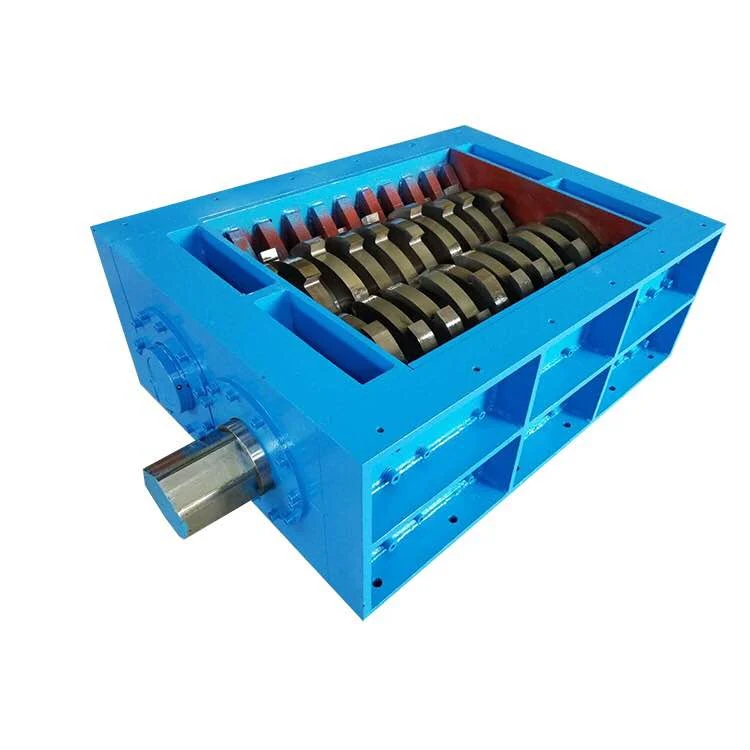
Describe complete pieces and how they will be handled
Provide the full geometry of bulky items, including irregular shapes and resistant sections. Explain the intended loading method and any preparation before feeding. Piece dimensions, weight or bulk density and contamination should be reviewed together when defining the hopper and cutting task.
- Photographs and normal and maximum dimensions of complete feed pieces.
- Piece weight or bulk density, thick sections and embedded materials.
- Loading method, upstream preparation, site limits and operating access.
- Required output, discharge handling, separation needs and downstream equipment.
Confirm the supporting system and delivery envelope
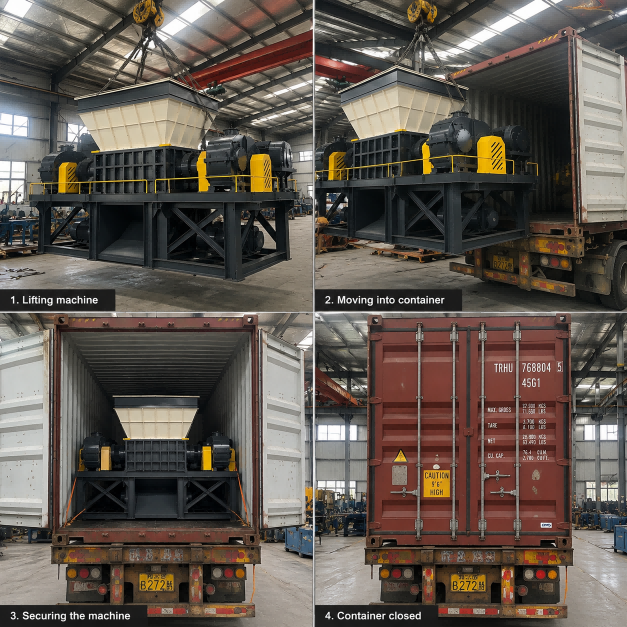
Feeding and discharge conveyors, separation and controls can be considered within the project. Identify their supply scope and interfaces before the layout is finalized. Delivery planning should then use the confirmed dimensions, weight, lifting points, packing method and shipping route for the supplied configuration.
Can every bulky item enter without preparation?
Suitability depends on the complete piece, composition, contamination and selected configuration. Some feed may require sorting or upstream preparation. Confirm acceptable material and loading limits instead of relying on the class number or a reference photograph.
Coordinate delivery, positioning and ongoing access
The same project drawing should inform delivery planning and the permanent line layout. Confirm the final equipment envelope before deciding how it will enter the site, be placed and remain accessible for service.
- Review confirmed dimensions, weight, lifting points and the planned shipping or site-handling route.
- Show access around the hopper, drive and cutter chamber, including removal routes for serviced components.
- Identify the supplied conveyors, platforms, guards and controls separately from supporting equipment provided by the site.
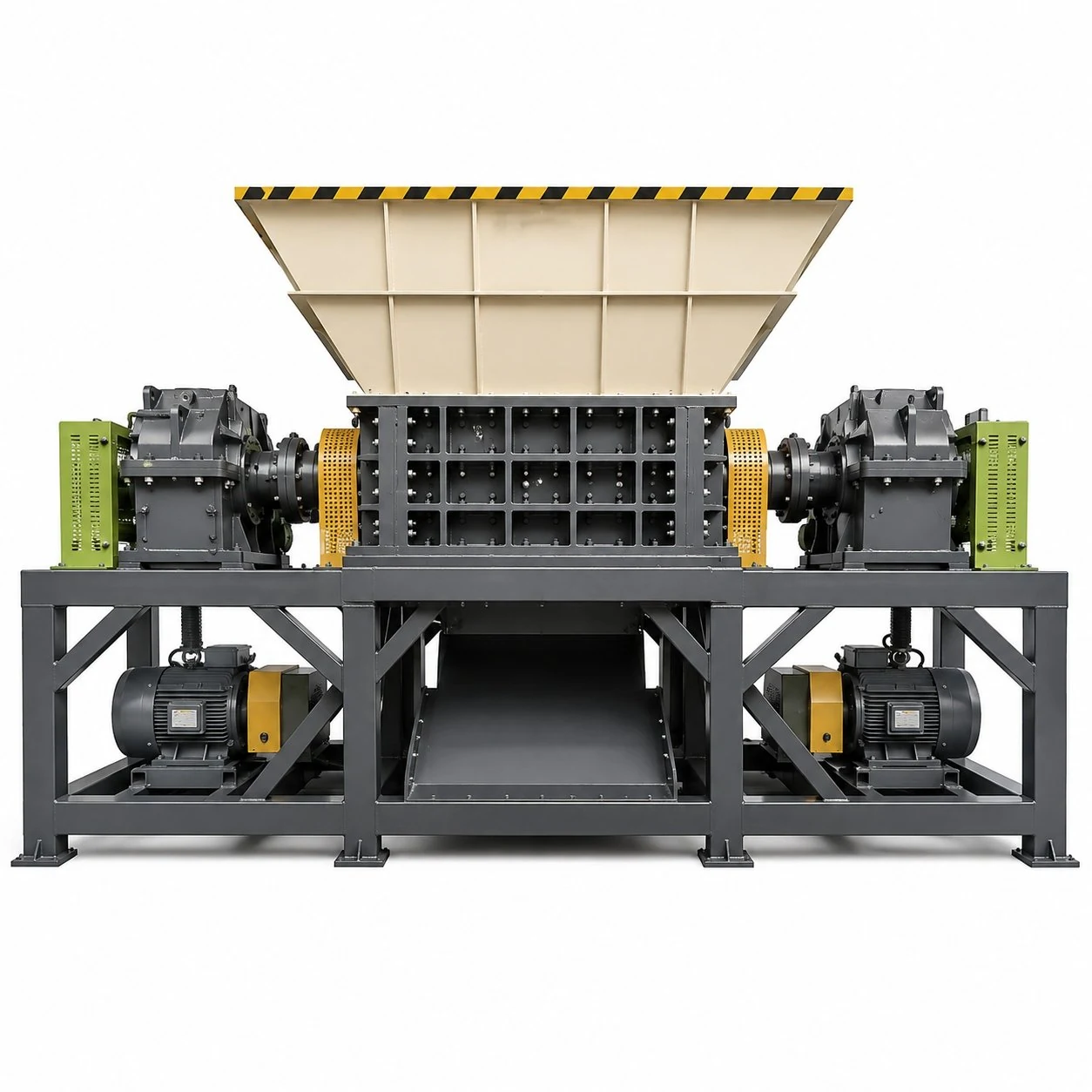
FY-SS02-1400 Heavy-Duty Dual-Shaft Shredder — practical questions
Does a bulky item always need a larger cutting chamber?
Its full geometry, loading presentation and resistant sections need review together. Preparation, hopper design or a different process arrangement may change the requirement, so compare the complete handling task.
Can the photograph be used to design the site layout?
Use the photograph to discuss equipment arrangement. Final dimensions, access, lifting and interfaces must come from the approved drawing for the project.
When should the 1600 class be reviewed?
Compare it when the project focuses on a high-duty industrial waste-processing line. Specify the workload, feed variability and required operating pattern so the alternative is assessed on actual process needs.
Prepare your FY-SS02-1400 review
Send material photographs, the most difficult expected pieces and the process information above. Final specifications, options and acceptance criteria should be recorded in the project quotation and approved drawings.
Download the FY-SS02 series selection guide (PDF) for the shared selection framework. It is a series reference, not a final specification for this model.
Review FY-SS02-1600 · Return to the FY-SS02 series · Discuss your material with FYXFER SHRED