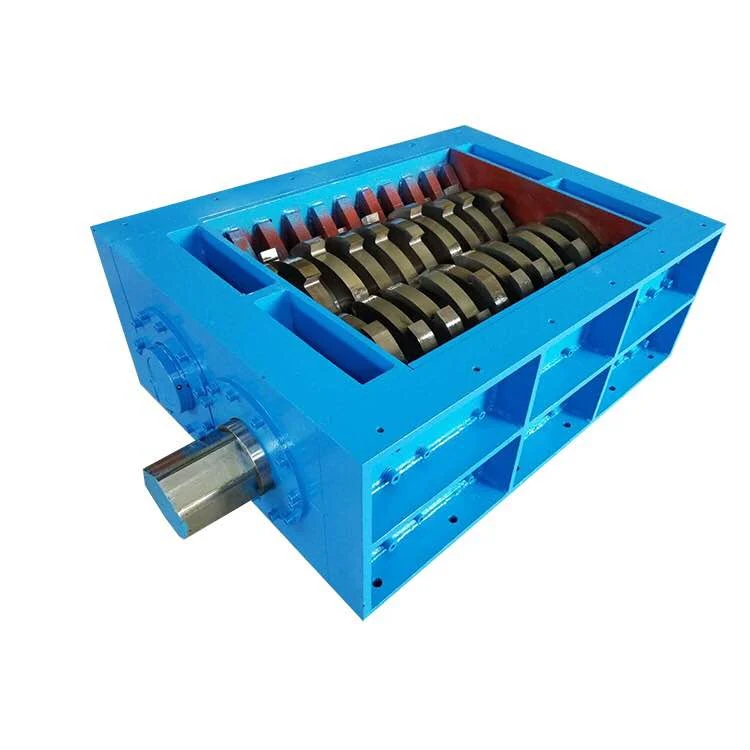
A single-drive starting point in the FY-SS02 range
FY-SS02-600S is the published single-drive, dual-shaft starting point in the FY-SS02 600 class. Its 11 kW drive value is a reference for application review. The machine still uses two cutter shafts; single drive describes the drive arrangement.
Consider this configuration when reviewing suitable bulky, tough or irregular waste that calls for heavy-duty primary reduction. The material, loading pattern and required output determine whether the 600S is an appropriate starting point.
FY-SS02-600S configuration reference
| Item | Basis for review |
|---|---|
| Model | FY-SS02-600S |
| Project class | Single-drive 600-class starting point |
| Cutting system | Dual shaft; cutter geometry selected for the material and required result |
| Drive | Single drive; 11 kW published reference, subject to application confirmation |
| Feed opening, dimensions and weight | Confirm in the approved project drawing |
| Throughput and output size | Confirm against actual feed, loading, configuration and duty |
Make the first heavy-duty review specific to the waste
Use the single-drive starting point to organise a clear application review. Separate the normal waste stream from the largest, toughest or most irregular pieces, and explain which items must be handled together. The initial question is whether the proposed primary-reduction route suits that material.
- Define the stream
- Identify rigid plastics, wood, rubber, flexible material or mixed components as applicable, with the condition and proportion of each.
- Disclose difficult contents
- Show inserts and contamination, as well as heavy or resistant sections. Agree sorting or preparation before unsuitable items reach the machine.
- Define the result
- Describe collection, sorting, transfer or further processing and provide the output criteria required by that next step.
Single drive, two shafts and a complete material route
The FY-SS02 platform uses counter-rotating cutter shafts to engage suitable material, then tear and shear it for primary reduction. For the 600S, single drive describes the drive arrangement within that dual-shaft process.
- Prepare the waste and present it through the agreed manual or mechanical loading arrangement.
- Review how the shafts grip normal and difficult shapes instead of assuming all bulky items feed in the same way.
- Confirm the cutter configuration and agreed overload response for the proposed material.
- Transfer the reduced material to the planned collection, separation or downstream process.
Review the material load before fixing the drive
Start with the largest and most resistant pieces expected in normal use. A feed made mostly of manageable material can still contain thick sections, embedded objects or tightly packed pieces that change the cutting requirement. Disclose these exceptions with photographs and representative samples.
- Normal and maximum piece dimensions, section thickness and material composition.
- Piece weight or bulk density, contamination and the way material will enter the hopper.
- Required hourly or daily volume, operating hours and loading pattern.
- Target output distribution, collection method and the next processing operation.
Compare the 600S and 600D on configuration
The 600D is the dual-drive option within the same published class. Drive count alone does not establish which route will process your material, or how much output it will produce. Review the drive, cutters, feed arrangement and protection strategy together before making the comparison.
Does 11 kW define the capacity?
No. Throughput also depends on the feed condition, loading method, cutter arrangement, required output and operating duty. Confirm the intended material and acceptance criteria before treating any configuration as suitable.
Check service access and the collection route early
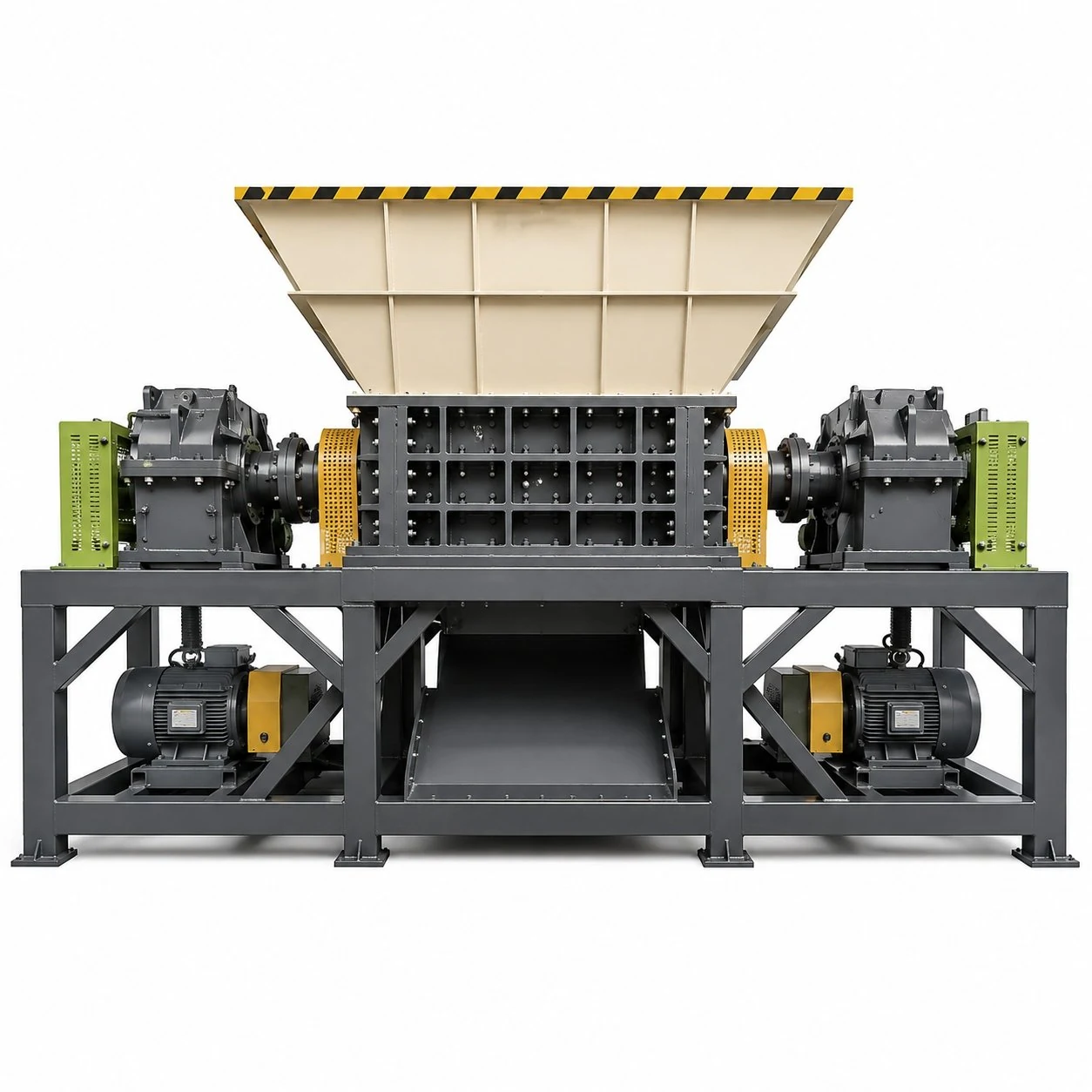
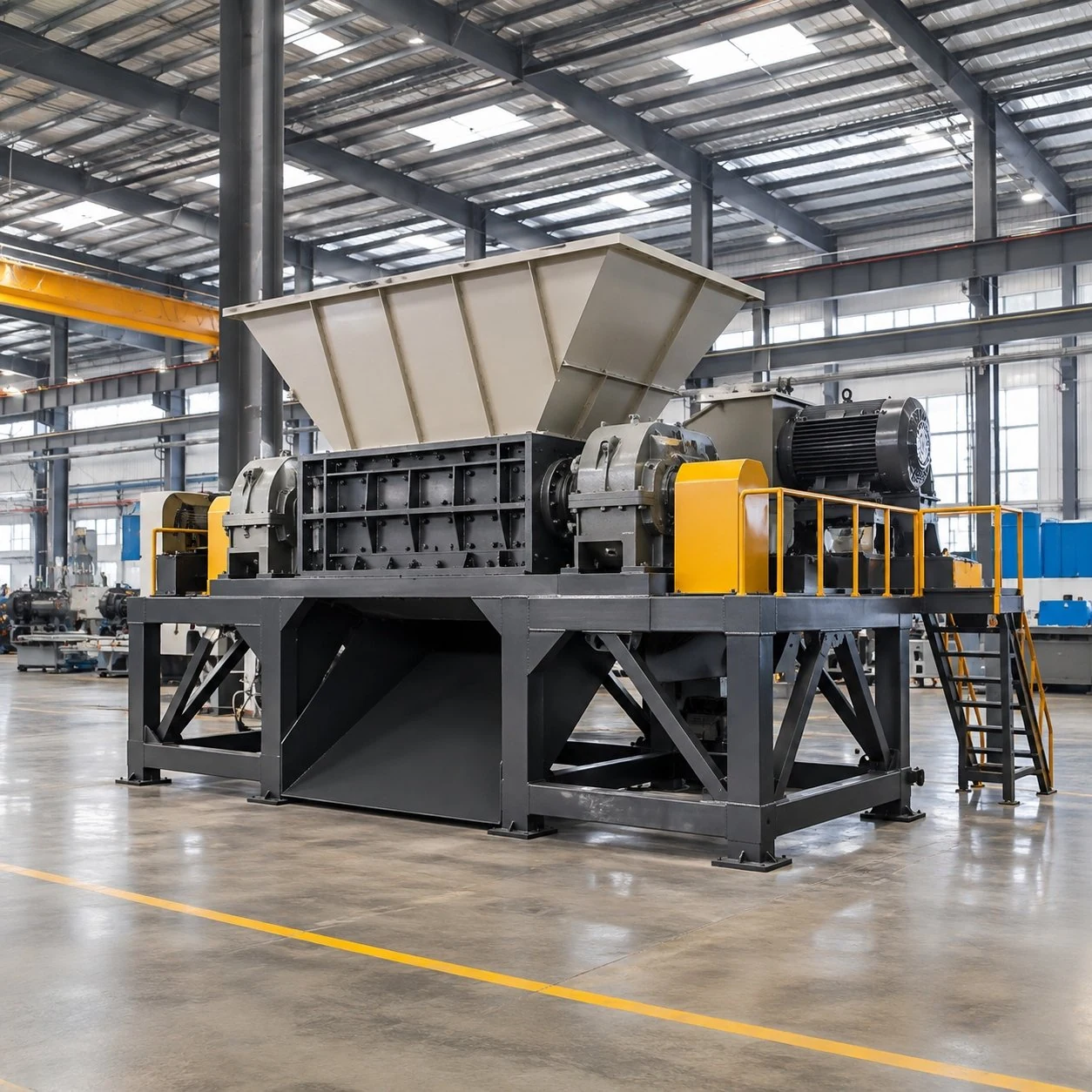
Include the hopper approach, discharge equipment and access around the drive and cutting chamber in the initial arrangement. The equipment photograph is a series reference for this planning discussion.
- Identify whether material is removed in containers or by conveyor and include that handling time in the operating pattern.
- Request inspection and cutter-service access, safe isolation procedures and spare-parts information for the confirmed configuration.
- Agree which conveyors, separators, guards and control interfaces belong to the supply before comparing proposals.
FY-SS02-600S Single-Drive Dual-Shaft Shredder — practical questions
Is single drive the same as single shaft?
No. The 600S belongs to the dual-shaft platform. The drive description should be kept separate from the number of cutter shafts when comparing the proposed machine and control arrangement.
When should I compare the 600D?
Compare it when the material and process review shows that the single-drive starting point is not the appropriate route. Provide the same feed and output requirements so the proposed drive arrangements can be assessed meaningfully.
Does the reference drive establish an hourly capacity?
No. Useful output also depends on feed geometry, composition, loading, cutter configuration, discharge and operating duty. Agree a result with stated material and process conditions.
Prepare your FY-SS02-600S review
Send material photographs, the most difficult expected pieces and the process information above. Final specifications, options and acceptance criteria should be recorded in the project quotation and approved drawings.
Download the FY-SS02 series selection guide (PDF) for the shared selection framework. It is a series reference, not a final specification for this model.
Review FY-SS02-600D · Return to the FY-SS02 series · Discuss your material with FYXFER SHRED