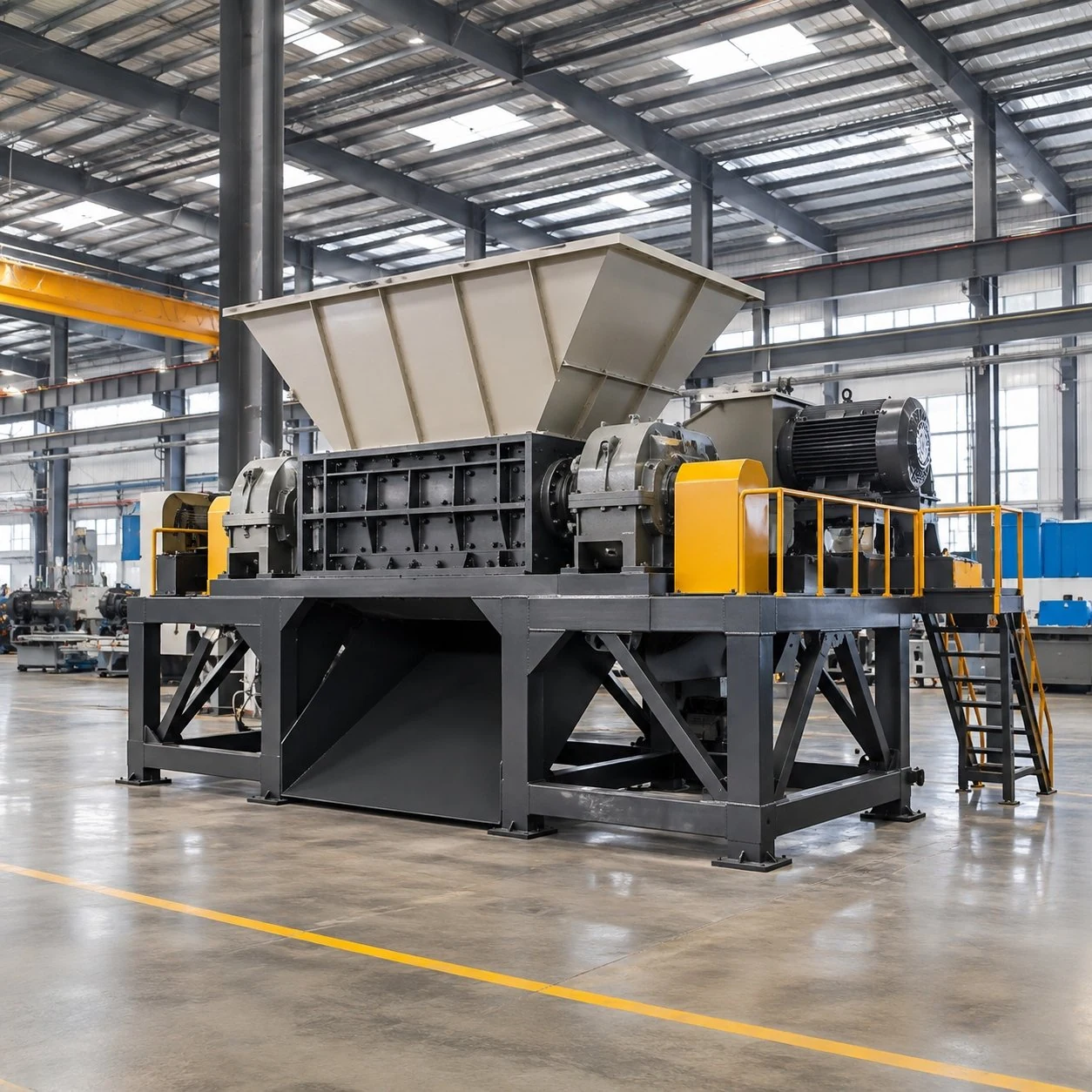
Primary reduction for demanding industrial waste
FYXFER SHRED offers the FY-SS02 platform for reviewing bulky, tough, mixed or irregular waste that requires a heavy-duty shredding approach. Two slow-running cutter shafts grip, tear and shear suitable material. The cutting system and surrounding equipment are configured around the waste stream, feeding method and required downstream result.
Start with the most difficult pieces expected in normal operation. Their dimensions, construction and contamination can influence the hopper, cutters, drive and protection strategy even when most of the feed is easier to process.
Which waste streams can be evaluated?
Applications include suitable large plastic parts and containers, rubber and tire-derived feed, wood and pallet waste, textiles and flexible materials, and selected light-metal or mixed industrial scrap. Each stream requires a separate review of composition, piece geometry, contamination and the intended process.
For tires, disclose construction and steel content. For mixed scrap, identify embedded metal, stones, liquids and other contaminants. Some materials require sorting, removal of contaminants or upstream preparation. A material category alone does not establish compatibility with a particular configuration.
For regular runners, trims and smaller plastic rejects, compare the FY-SS01 compact range and FY-SS01-300 reference configuration.
Published project classes
These model codes identify project classes. They do not establish a universal feed opening, capacity or machine size. Final specifications follow the material review and approved drawings.
| Model | Published basis for review |
|---|---|
| FY-SS02-600S | Single-drive, dual-shaft configuration with an 11 kW reference drive; application confirmation required. |
| FY-SS02-600D | Dual-drive, dual-shaft option; drive, cutters and feeding arrangement are project-defined. |
| FY-SS02-800 | Project-defined class for larger, tougher or more variable feed. |
| FY-SS02-1000 | Project-defined class for industrial feeding and downstream integration. |
| FY-SS02-1200 | Project-defined class for demanding primary reduction and engineered layouts. |
| FY-SS02-1400 | Project-defined class for bulky-feed systems and supporting equipment. |
| FY-SS02-1600 | Project-defined class for high-duty industrial waste-processing lines. |
Drive count and shaft count describe different features: the 600S single-drive reference still uses two cutter shafts. Do not derive power or opening dimensions from any model number.
Define the machine and its interfaces
Feeding and cutting
Review the loading method, complete feed dimensions, hopper arrangement, shaft and cutter geometry, drive and maintenance access together. An electric or hydraulic drive approach can be evaluated against the material load, operating duty and control requirements.
Protection and discharge
The control strategy can include stopping and reversing the shafts when the configured overload condition is detected. Guarding, emergency stops and operating limits must match the agreed machine scope. Overload response does not make unsuitable material acceptable.
Describe how reduced material will leave the machine. Feeding conveyors, discharge conveyors, magnetic separation, sorting equipment and control interfaces can be reviewed as part of the complete process.
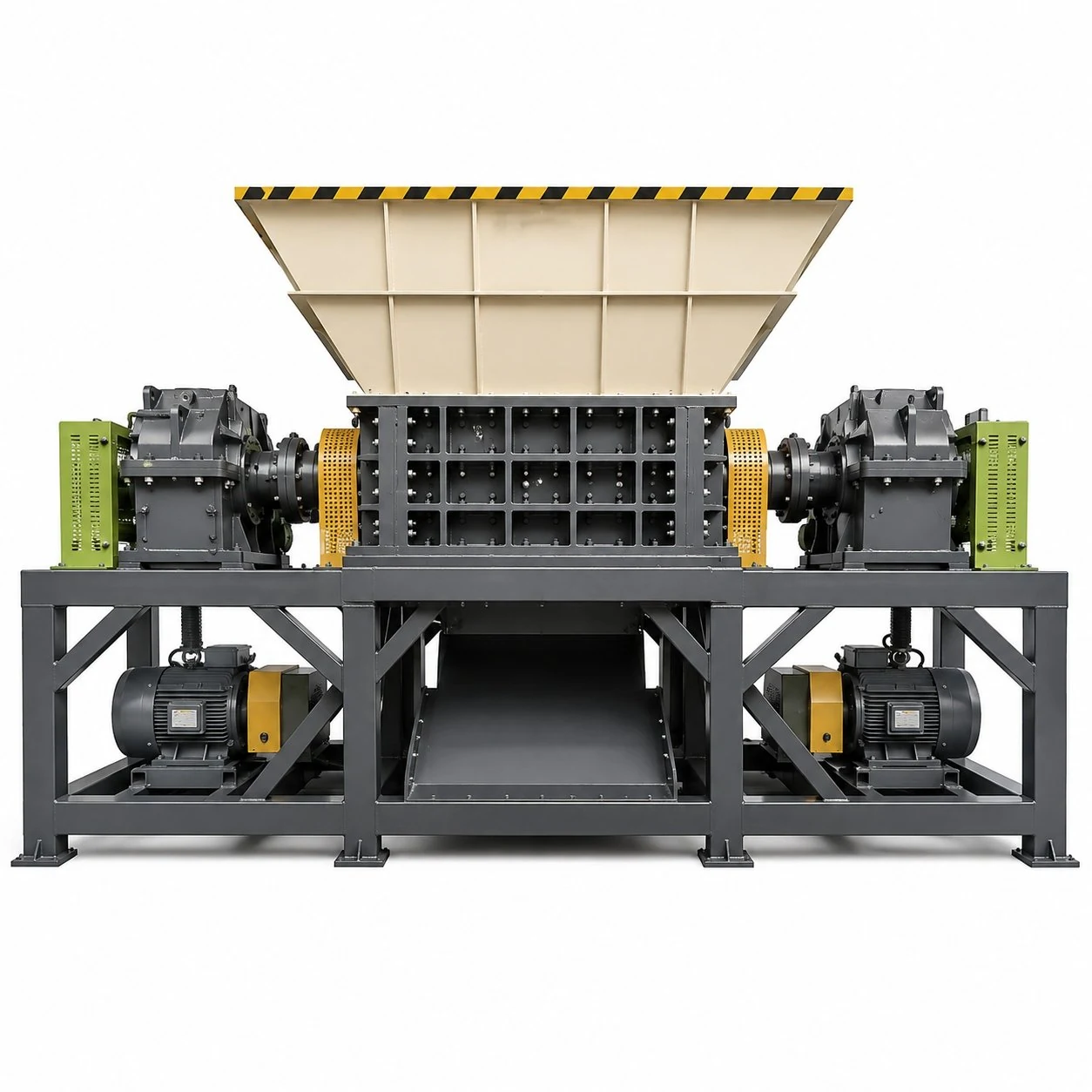
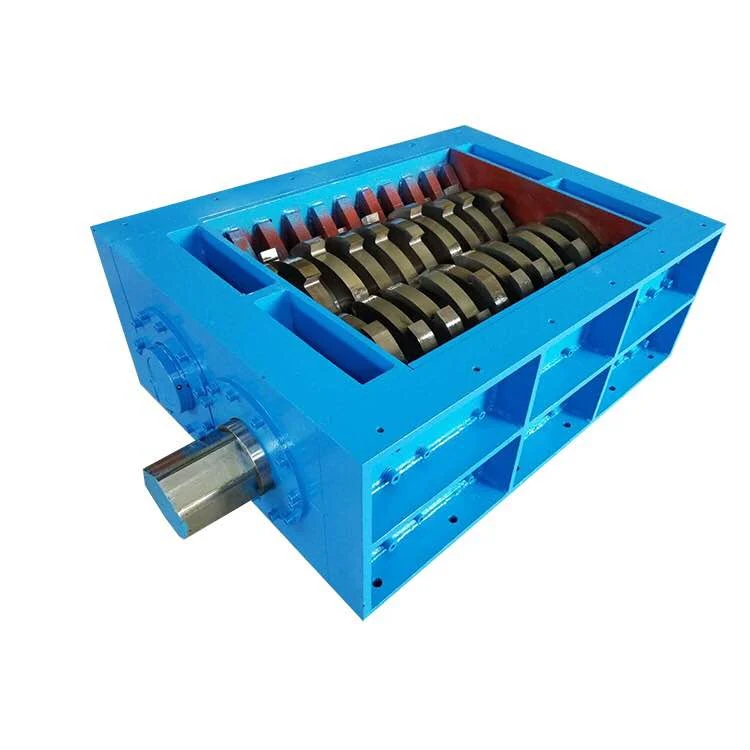
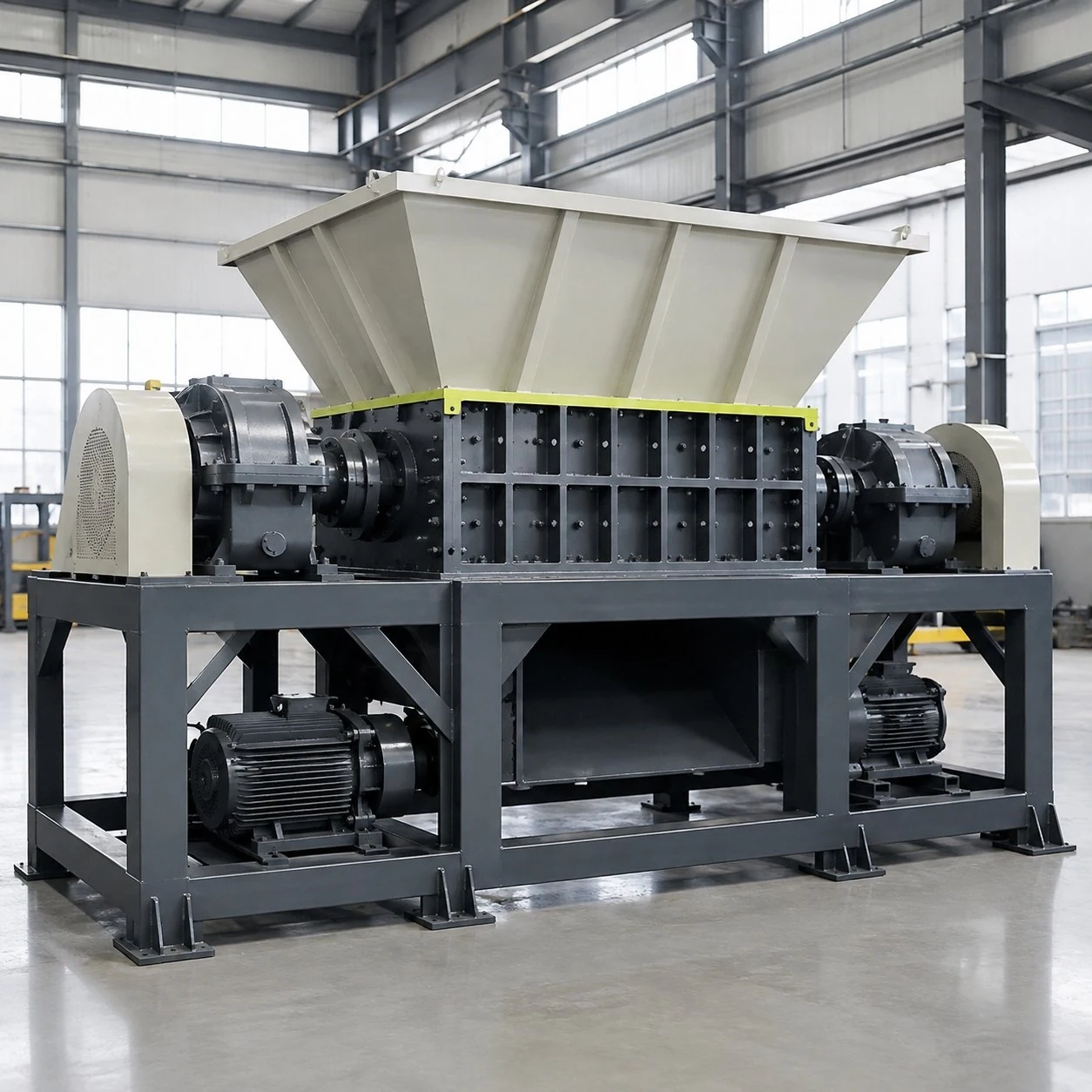
Use the equipment views as a configuration checklist
The gallery shows series equipment and a cutting-chamber reference. It does not establish that every photograph represents the same machine or any specific 600S, 600D or larger project class.
- Hopper and loading: compare the complete feed geometry and loading method with the proposed opening and access arrangement.
- Cutting chamber: review cutter geometry and the most resistant expected material, not appearance alone.
- Frame and discharge: identify the collection or conveyor route and the clearance required around it.
- Drive and service access: confirm the project drive, maintenance access, guarding and controls in the proposed layout.
Describe the difficult part of each waste stream
| Waste stream | Details to provide | Project question |
|---|---|---|
| Large plastic parts or containers | Whole-piece dimensions, wall and solid-section thickness, resin and inserts. | What loading, cutter engagement and preparation are required? |
| Rubber and tire-derived feed | Construction, dimensions, steel content and preparation already completed. | Which cutting and separation requirements follow from that feed? |
| Wood, pallets or mixed rigid waste | Piece size, density, embedded objects, contamination and expected variation. | What must be removed or sorted before feeding? |
| Textile or flexible material | Loose, bundled or tangled condition, composition and loading pattern. | How should material be presented to the selected shaft arrangement? |
Material categories define the discussion; they do not authorize every item within a category. Keep feed preparation and excluded material clear when agreeing the configuration.
Can overload reversal make a mixed stream acceptable?
Reversal is part of a configured protection strategy. It does not replace material limits, contamination review or appropriate preparation. Disclose difficult objects before the drive and cutting system are selected.
How should a project trial be recorded?
Record the sample composition and weight, largest pieces, loading method and test time together with the output distribution and any bridging or reversal events. Agree what the downstream process will accept, and distinguish the test result from the required daily workload.
The model links above provide the individual starting points. Only the 600S has the stated 11 kW reference here; dual drive does not justify doubling that value for the 600D, and larger class numbers do not define a feed dimension or throughput.
Information needed for a useful review
- Feed: composition, normal and maximum piece dimensions, piece weight or bulk density, and photographs.
- Difficult material: thick sections, resistant pieces, embedded objects, moisture and contaminants.
- Required result: output distribution, unacceptable oversize pieces and the downstream operation.
- Workload: required hourly or daily volume, operating hours and loading pattern.
- Site: available space, loading and discharge methods, power supply and equipment interfaces.
Representative material and a project trial can help confirm the cutting arrangement and acceptance criteria. Throughput and output depend on the actual feed, loading, configuration and operating duty; the 11 kW reference is not a capacity guarantee.
Confirm the scope before ordering
The quotation and approved drawings should identify the selected configuration, machine limits, options and agreed acceptance criteria. Delivery preparation follows the confirmed dimensions, weight, lifting points, packing method and shipping route.
Review the available technical documents, then send FYXFER SHRED your material and process requirements.